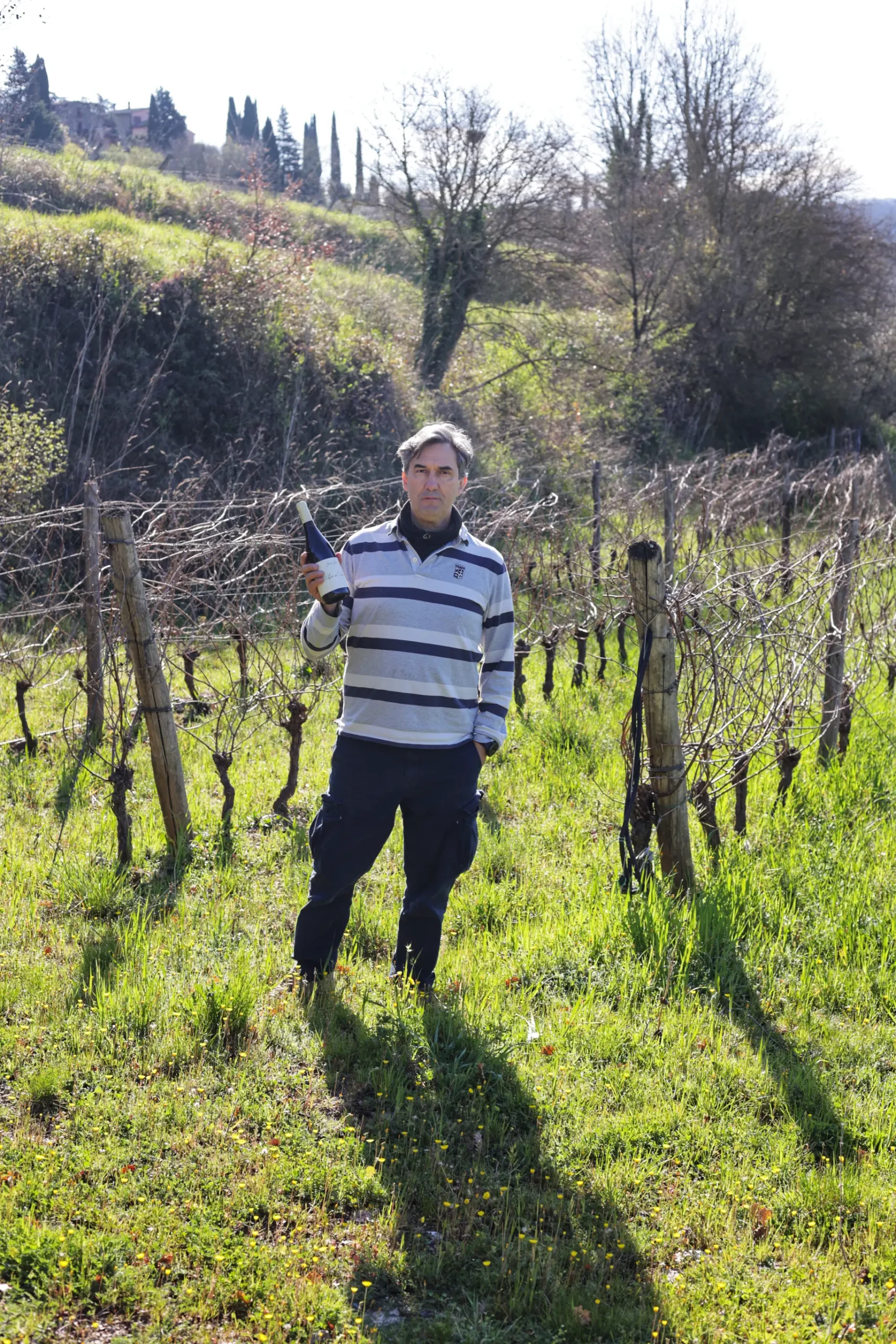
The story of Pigole di Dudda began back in 2004, when Giacomo Grassi found himself with a hectare of Chianti Classico and IGT quotas to plant. From the beginning, his approach to viticulture had not been limited to just following the rules of tradition but aimed at growth and study, for a rediscovery of the past that was respectful of the land and its roots.
In those years, the Italian wine market was overwhelmed by a trend: French grape varieties, which were in high demand, seemed to be the way to go, and Giacomo-who is also a consulting agronomist for other farms-had the opportunity to pursue a Master’s degree in Viticulture precisely in Bordeaux.
After studying these grape varieties in depth, however, he realized that there was little authentic or lasting behind this trend: French wines had achieved success not because of their affinity with the Tuscan soil but because of a clever commercial game. What seemed like a passing fad would soon give way to the rediscovery of native grape varieties, the varieties that have characterized the Tuscan territory for centuries.
Back in Italy, he continued his studies, and it was at this point that, among his notes from a distant time, Giacomo came across a 1922 pamphlet about forgotten grape varieties: inside was an image, a painting by Bartolomeo Bimbi, a 17th-century painter (1648-1729), depicting some 30 grape varieties found in Tuscany more than 300 years ago.
It was a document that made him think deeply about the possibility of rediscovering these minor grape varieties that had resisted the passage of time; thus it was that his research took a new turn. It was not just a matter of historical curiosity, but a real mission.
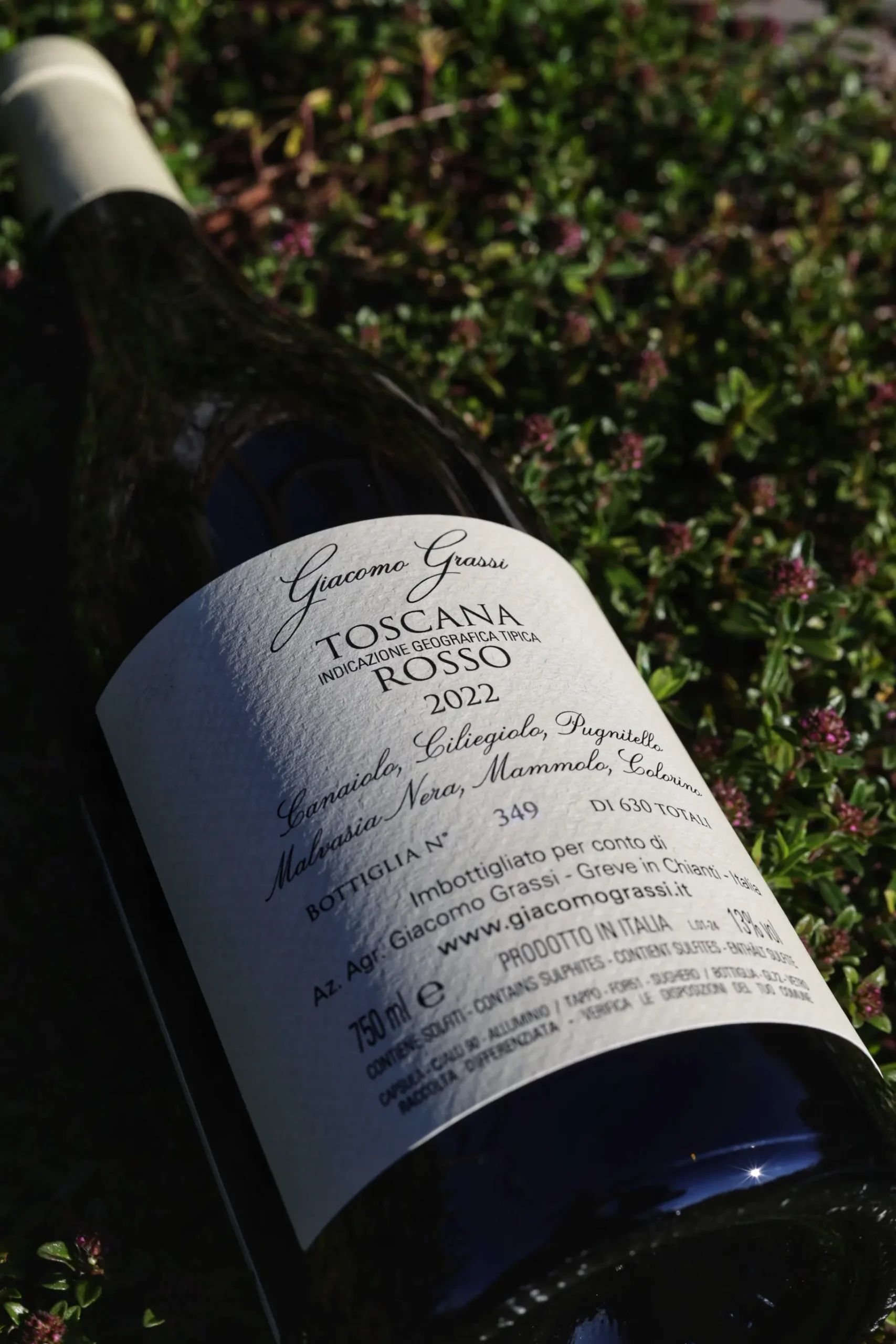
Giacomo decided to plant eight of these minor grape varieties, in eight small “pigules,” that is, small plots of land: the varieties were ancient and little-known grapes, but all with a history and character of their own. These included Canaiolo, Malvasia Nera, Colorino, Pugnitello, Mammolo, Ciliegiolo, Foglia Tonda and Abrusco. Grape varieties that tell the story of a land that has never stopped evolving but jealously preserves its heritage.
In 2020, with the pandemic changing the course of things, Giacomo was faced with a new challenge: having canceled all his Farm’s oil presentation events, his free time allowed him to focus even more on his vineyards. These included a vineyard of Sangiovese that, while neither young nor old, had left him uncertain of its potential in producing a wine for long aging, so he decided to also “flank” a Canaiolo and a Colorino cone in his viticultural project: when the harvest arrived, he realized that the Sangiovese grape was perfect as it was, he did not need to add any other supporting vines.

But the Canaiolo and Colorino pinecones were there, ready to be harvested.
CURIOSITY:
Pigola: In agriculture, an irregularly shaped field, which generally results as a residual part in the division of a fund into regular (mostly rectangular) fields. (www.Treccani.it)